When the electricity does not belong to the consumer: Correctly calculating operating models and PPAs
Mar 13, 2026
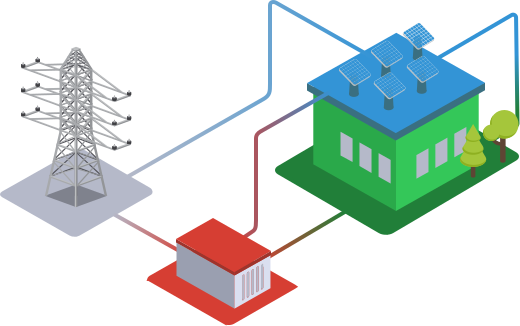
What is an Onsite PPA?
A Power Purchase Agreement (PPA) is a long-term electricity supply contract between two parties: the operator, who builds and finances a generation facility – typically a PV system, often combined with a battery storage – and the consumer, who purchases the generated electricity at a pre-agreed fixed price.
What is special about the onsite PPA: The facility is located directly on the premises or the roof of the consumer. Therefore, the electricity does not flow through the public grid but is consumed directly on-site. The consumer benefits from electricity prices that are typically below the grid electricity purchase price – without having to invest themselves. The operator earns from the difference between their generation costs and the agreed PPA price.
This model is gaining significant importance: Rising grid electricity prices make the PPA discount more attractive, and many businesses cannot or do not want to tie up their own capital in energy facilities.
The common model variants
Depending on ownership structures and contract arrangements, different operating models emerge. The most important:
PV + storage belongs to the operator
The classic: An investor builds a solar system and battery storage on the premises of the consumer. The consumer buys all generated electricity at the PPA price. What is not consumed is either fed into the grid by the operator or charges the battery.
Only the storage belongs to the operator – the PV belongs to the consumer
An increasingly relevant variant: The consumer already owns a PV system but does not want to finance a storage system. The operator provides the storage and receives a share of the savings achieved (profit-sharing). (This variant will soon be supported in Lumera.)
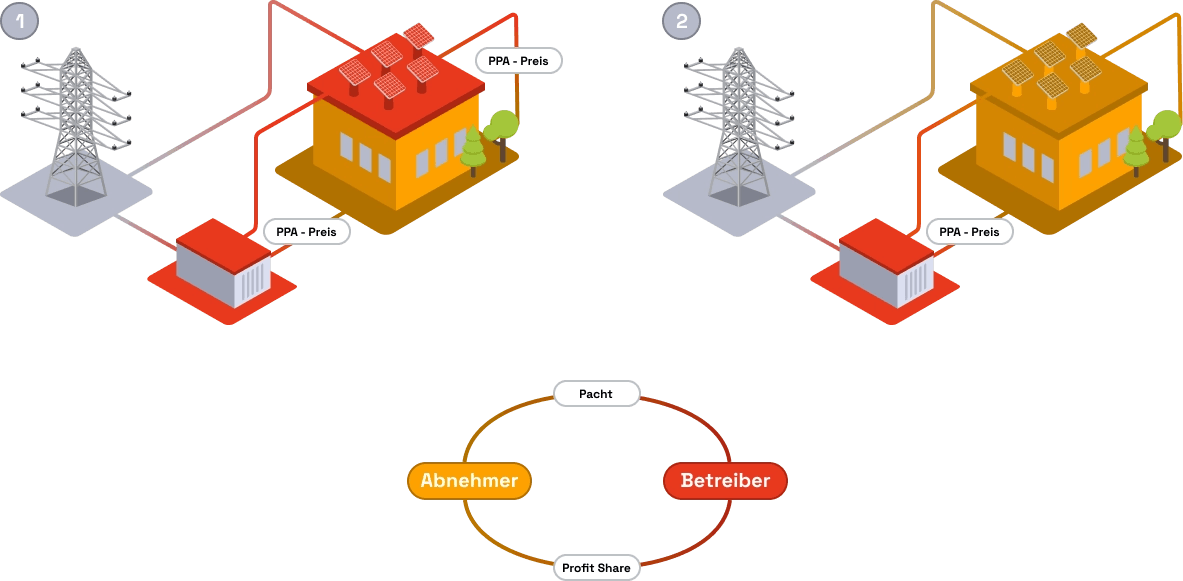
There are various compensation models:
Consumer pays PPA price to the operator
Consumer and operator agree on a fixed PPA price which the consumer pays to the operator for each kilowatt hour from storage (and also from PV in model 1).
With rent to the property owner
If the operator and the property owner are not identical, a rent payment flows in addition – another cost point that must be considered in the operator’s economic calculation.
Profit-sharing for peak shaving
If the storage reduces the maximum grid demand of the consumer, their demand prices in the grid fee calculation decrease. This saving does not automatically belong to the operator – it is divided by contract, e.g., 70% to the operator, 30% to the consumer.
The core problem: Two parties, one facility
Classic planning tools show the overall economic viability of a system: how much electricity is produced, what costs arise, how high the total savings are. This is sufficient for a self-consumer. In the case of the operator model, this is not enough.
The decisive questions remain unanswered:
What IRR does the investor achieve on their invested capital?
What is the payback period from the operator's perspective?
How much does the consumer actually save compared to pure grid consumption?
Who receives what share of the peak savings?
Without separating both perspectives, it is not possible to reliably negotiate PPA prices or to convince investors or banks.
Insert: What happens if the spot price exceeds the PPA price?
A situation that can occur in practice and is rarely considered: The consumer has a dynamically priced electricity tariff – their grid reference price fluctuates with the day-ahead market. The PPA price is, on the other hand, fixed, e.g., 11 ct/kWh.
On days with very high spot prices – around 25 ct/kWh or more – it would be mathematically more profitable for the operator to feed electricity into the grid instead of covering the consumer’s load. The consumer would then have to purchase expensive grid electricity, even though a facility is on their roof.
This conflict of interest is often resolved with a clear rule: The load coverage of the consumer always takes precedence over feeding into the grid. The operator only optimizes with the electricity that remains after covering the load. This protects the consumer and creates a fair basis for contract structuring.
How to calculate it correctly
A correct analysis separates the economic viability consistently by parties – based on the same technical simulation.
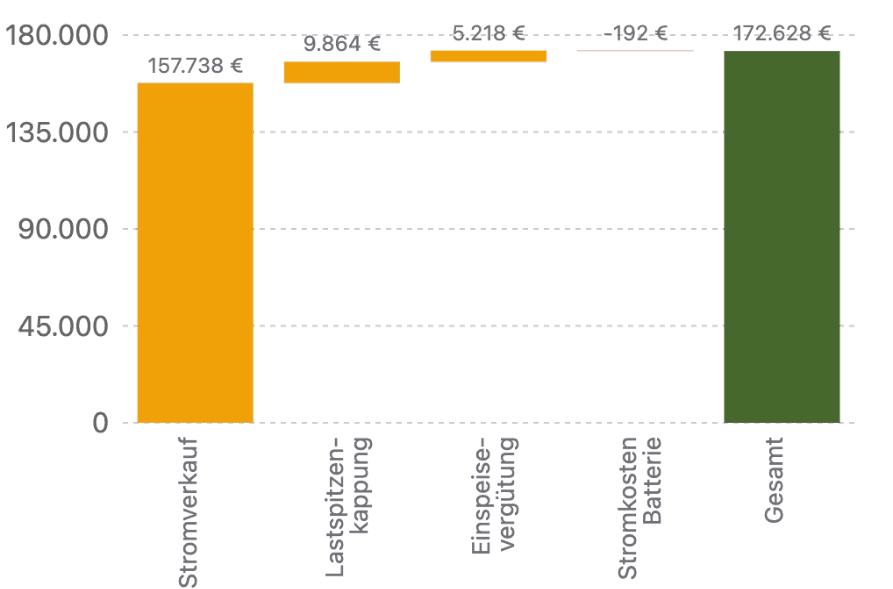
Operator perspective
The operator invests and bears the economic risk. For them, the following count:
PPA revenues: Delivered energy quantity (kWh) × PPA price. The main source of income.
Share of peak savings: Their contractually agreed share of the consumer’s peak shaving.
Arbitrage revenues and feed-in remuneration: Remain fully with the operator.
IRR, NPV, payback: The key figures with which investors and banks evaluate the project.
Consumer perspective
The consumer does not invest – they save. For them, the following count:
PPA savings: Energy quantity purchased × (Grid reference price − PPA price). The direct benefit compared to classic grid consumption.
Share of peak savings: Their share of the reduced demand prices.
CO₂ reduction and green electricity share: How much percentage of consumption comes from the PPA facility – relevant for ESG reporting.
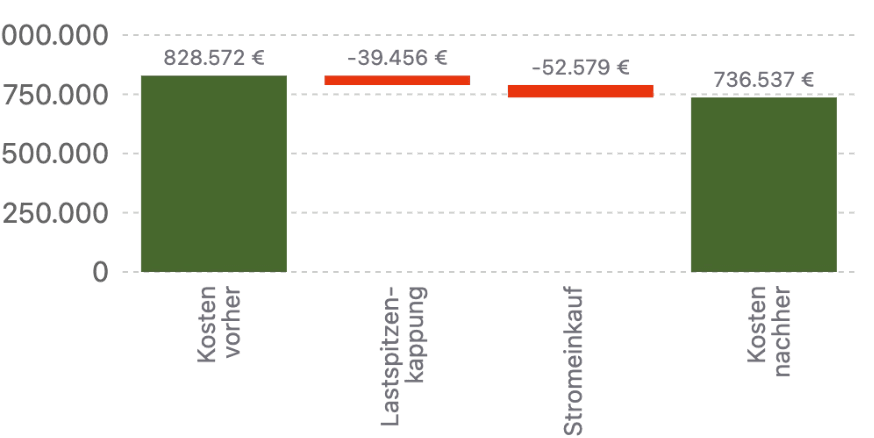
Lumera calculates both perspectives in a single analysis – based on the same simulation, without needing two separate tools or spreadsheets.
Conclusion
Operating models and PPAs are no longer a niche topic. They are the reality of many projects in which investor, operator, and consumer have different interests – and all three need a solid foundation for their decision.
A comprehensive calculation is not sufficient for this. Those who want to negotiate PPAs, convince investors, and develop fair contractual structures need both perspectives – separately, transparently, and based on the same technical simulation. The variety of models will continue to grow in the future: new ownership variants, longer terms, and more complex divisions. Planning must keep up.